Drawn to the centre
On circles, fractals, and why humans across every culture kept drawing the same thing.
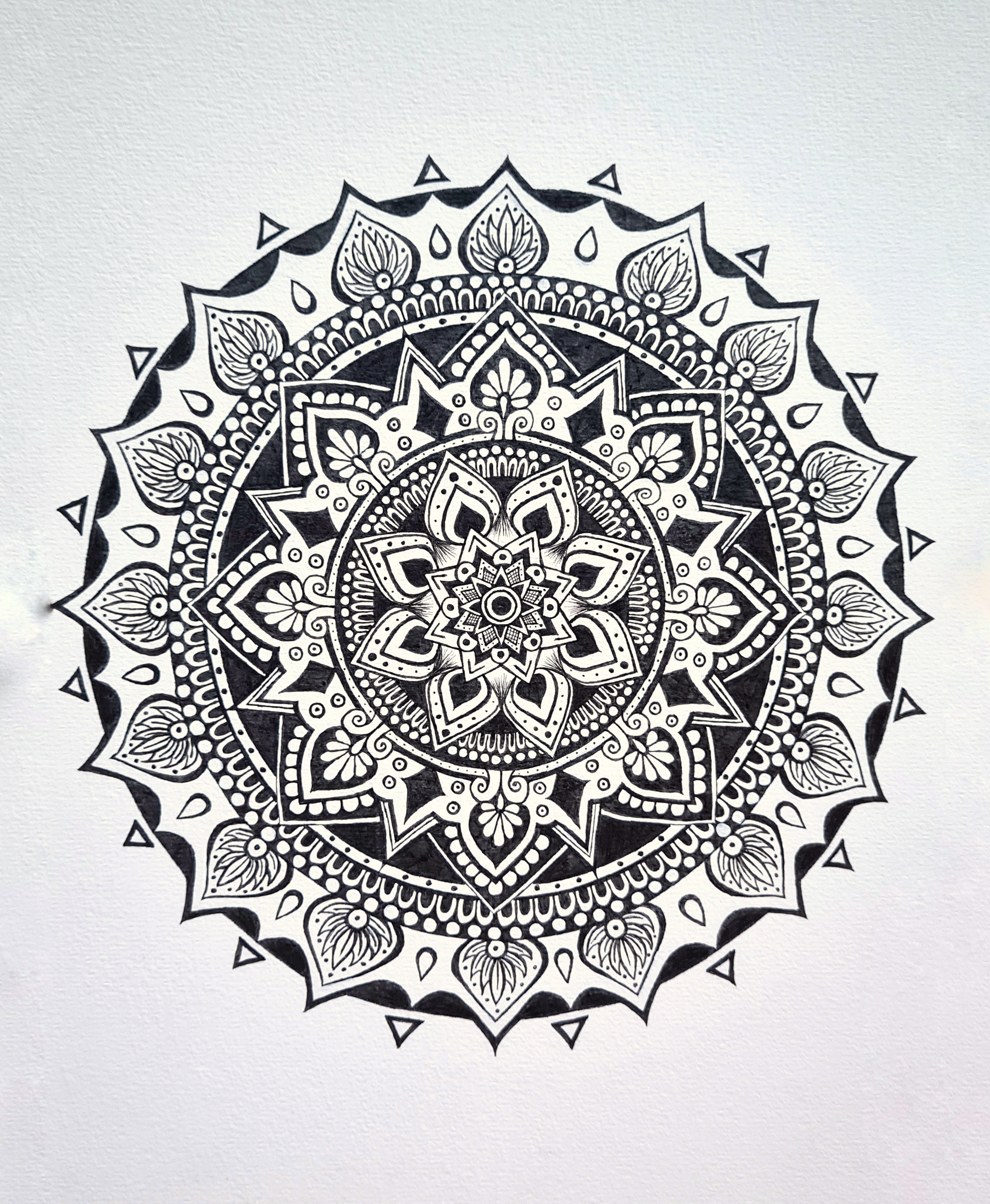
Hand-drawn mandala, ink on paper — Fractal Alley studio.
It started during a work placement. Long stretches of waiting — the kind of in-between time that usually ends up on a phone screen. I reached for a pen instead and started drawing circles. Not planning anything. Not trying to make something good. Just drawing, ring by ring, from the centre outward.
Something shifted in those quiet moments. The repetition was calming in a way I hadn’t expected. The hand had a job to do, and the mind followed — quieter, slower, more present. By the time the waiting was over, I had something on the page I hadn’t set out to make. I’ve been drawing mandalas ever since.
But long before I picked up that pen, humans all over the world were already doing the same thing. And I don’t think that’s a coincidence.
The pattern was already there
Nature has always drawn in circles. A succulent grows its leaves from a central point, each one spiralling outward in perfect radial sequence. A nautilus shell expands from its core in the same proportional spiral, over and over. A snowflake, a sunflower, a cross-section of a tree — all of them organised around a centre, all of them repeating the same pattern at different scales. These are fractals: forms that echo themselves, that contain the whole in every part, that grow from the inside out.
We are surrounded by them. And I think, without knowing the word for it, humans have always noticed.
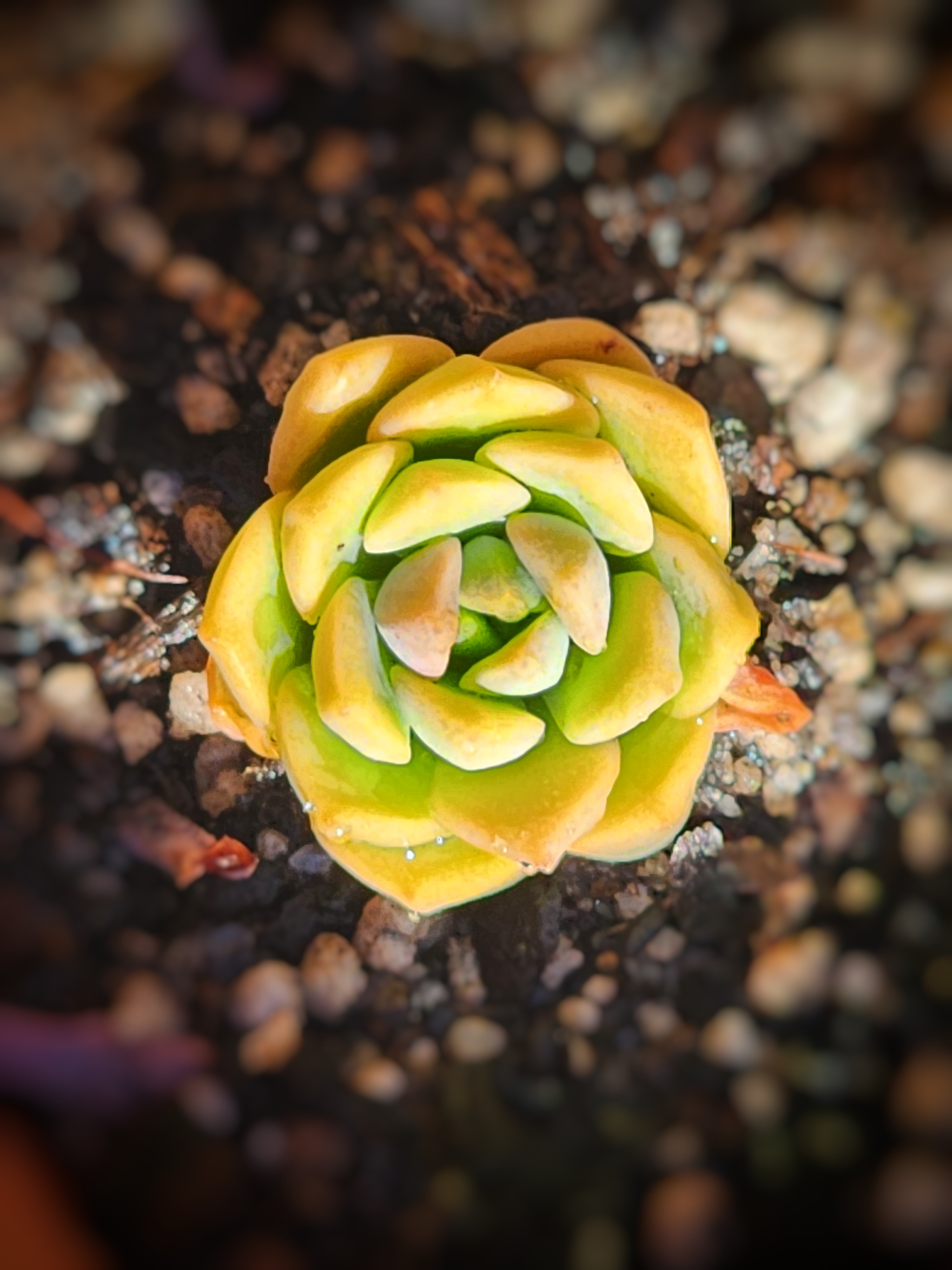
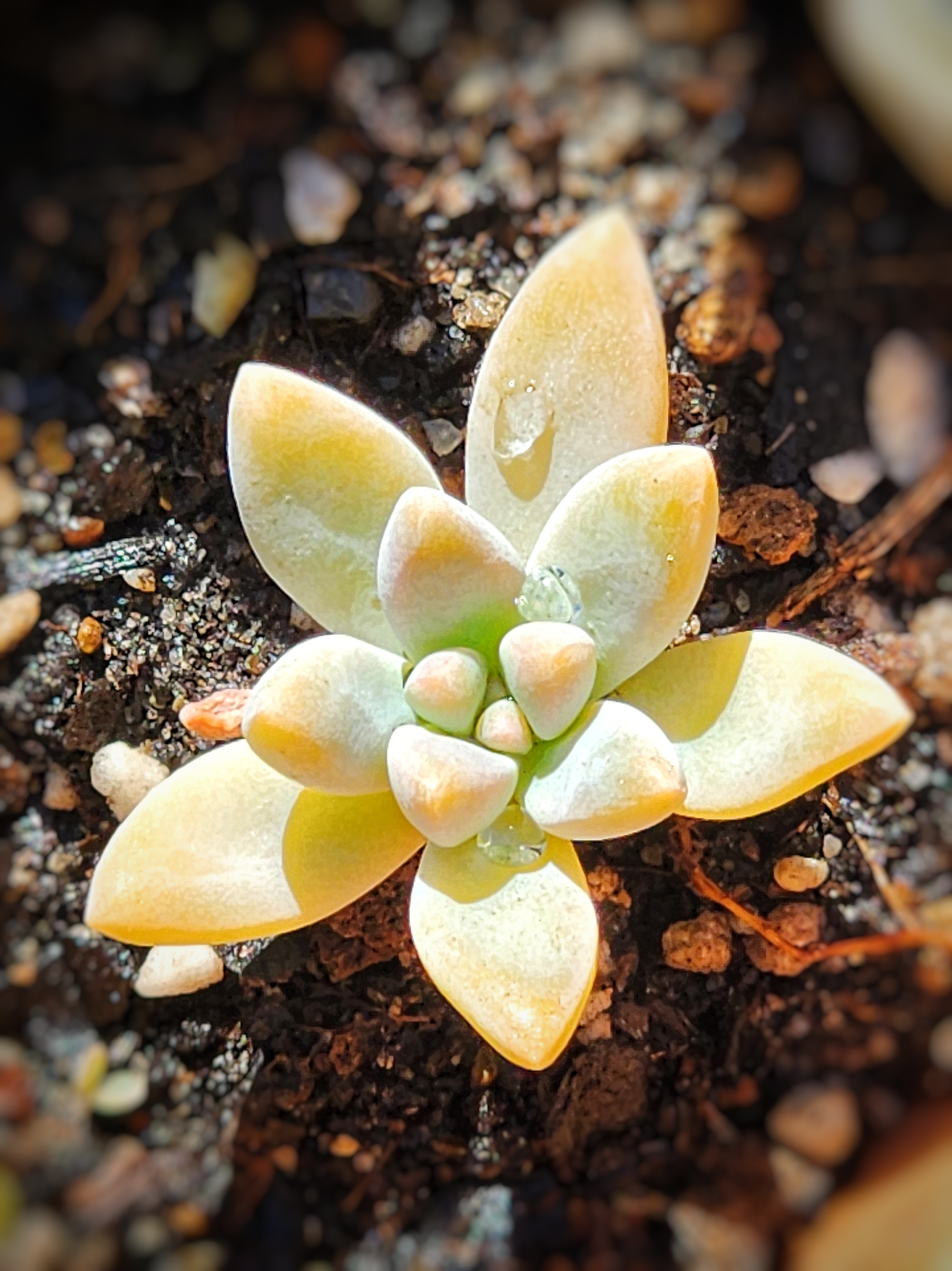
Echeveria and Graptosedum — both shot from directly above. The mandala was already there.
The same shape, across every culture
The mandala form appeared independently across cultures that had no contact with each other — and looking at nature, it’s not hard to understand why. Tibetan Buddhist monks created intricate sand mandalas grain by grain, only to sweep them away when finished. The Navajo made sand paintings with radial symmetry for healing ceremonies. Hindu yantras — geometric diagrams for meditation — build outward from a central point in concentric rings. Medieval European cathedrals placed enormous rose windows above their doors: circles filled with repeating geometric pattern, drawing the eye inward. All of them, in different parts of the world, at different times, looking at the same nature and arriving at the same form — everything radiating from a centre, everything in balance.
Different continents. Different centuries. Different beliefs. The same instinct: start from the centre and work outward.
What Jung noticed
Carl Jung spent decades mapping the unconscious mind and became fascinated by mandalas after noticing that his patients — with no knowledge of Eastern traditions — spontaneously began drawing circular, symmetrical forms during periods of inner turmoil or transformation. He began drawing them himself and came to believe that the mandala represented the Self: a deeper organising centre beneath the conscious mind. The circle as wholeness — nothing excluded, no edges where something gets left out. For Jung, the fact that this form kept appearing everywhere, across every culture and century, was evidence that some patterns run deeper than any single tradition.
What Jung said the mandala represents
- Wholeness — the circle excludes nothing. No corners, no hierarchy of inside and outside
- The Self — not the conscious ego, but the deeper organising centre of the psyche
- The centering process — the ego finding its way back to something stable and still
- Protection — many traditions use mandalas as sacred enclosures; Jung connected this to the psyche’s ability to contain what feels overwhelming
From ritual to paper
Somewhere along the way, the mandala moved from ceremony into everyday life — from temple floors and cathedral windows into sketchbooks, tattoo studios, and the walls of homes. Some people find that shift diminishing. I don’t. If the impulse to draw in circles is something that runs this deep in us — something we share with a monk spending days on a sand painting that will be destroyed, and with a person in a waiting room reaching for a pen — then it makes sense that it keeps finding new forms.
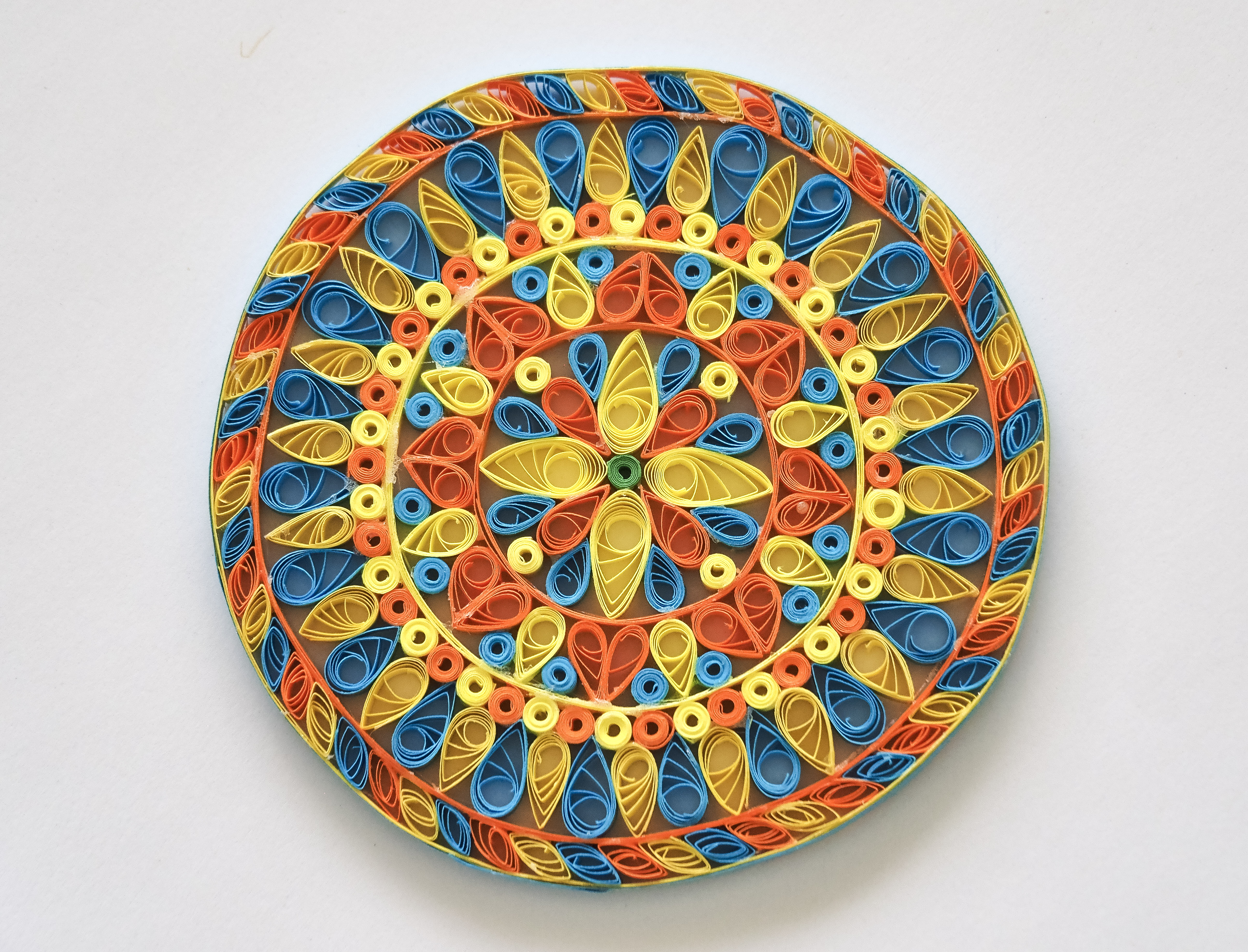
Quilled mandala — paper, patience, and a centre to work outward from. Fractal Alley original.
That is what drawing mandalas has always felt like to me. Not a style, not a trend. Something quieter than that — a form that already existed in nature, that humans have always recognised, that the hand finds its way back to when the mind needs somewhere to go.
There is more I would like to tell you about this — about what it actually feels like to draw one, what the process asks of you, and how it became something closer to a meditation than a hobby. More on that soon.
If you are curious about mandalas and would like to try drawing one yourself, the Mandala Workshop waitlist is open — you can add your name and I will let you know when sessions are running.