The practice of now
Between the breath and the line.
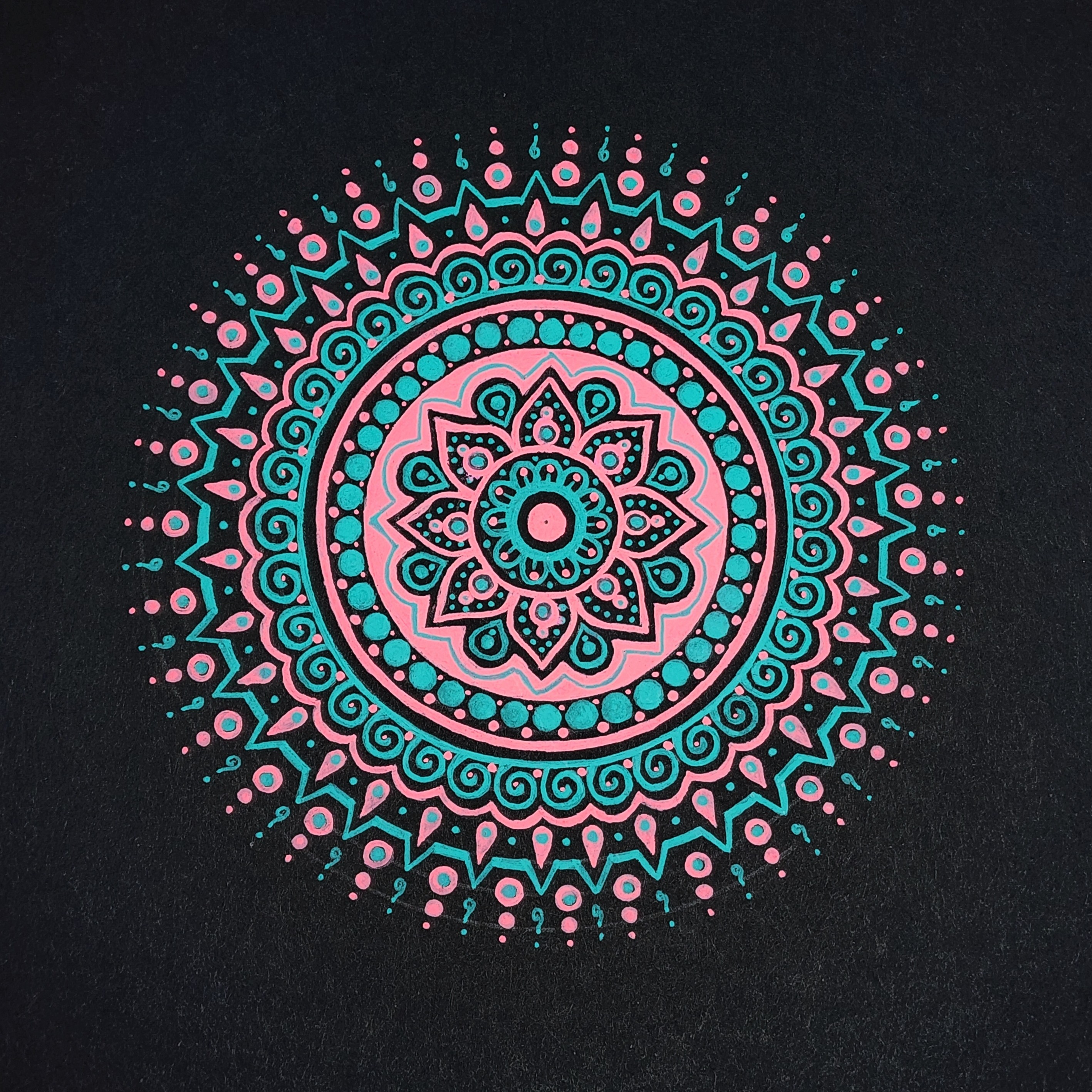
Teal and pink on black — drawn in the kind of quiet that only comes when you stop trying to make something great.
Every time I wanted to make something great, I was too scared to start. The blank page held too much — too much expectation, too much possibility of getting it wrong. So I did what I always do. I told myself it was just the practice one.
No pressure. Just warm up. See what happens.
And then, somewhere in the middle of not trying, something would shift. The lines would start finding each other. The rings would build outward with a kind of quiet confidence. By the end I’d be looking at something I couldn’t have made if I’d been trying to make it. The practice piece had become the piece.
It took me a while to understand what was actually happening. It wasn’t luck, and it wasn’t accident. It was the absence of pressure — and what becomes possible when you take that weight away.
Chasing something you can’t hold
There is so much that goes into drawing a mandala. The geometry has to be right — the rings evenly spaced, the divisions precise, each section mirroring the one beside it. And yet if you hold all of that too tightly, if you grip the pen with the weight of wanting it to be right, the line betrays you. A tremor. A slight curve where there should be none. The hand knows when the mind is afraid.
The truth is, we are always chasing something in this work. Some idea of how it should look, some vision of the finished thing that exists only in the imagination. That chase is not a bad thing — it is what makes you reach further, try harder, care about the mark you’re making. But there is a point where the chase becomes pressure, and pressure becomes the enemy of the very thing you are trying to make.
The piece you were trying to make is rarely the piece that comes out. The one that comes out is usually better — because it carries what you actually felt, not what you planned to feel.
The breath is part of it
What I’ve learned, slowly and through a lot of practice, is that the way in is through the body. Not the mind — the body. A steady hand comes from a calm body, and a calm body comes from the breath.
Before a difficult line — one of those long sweeping curves, or the first mark on a fresh ring — I stop. A breath in, slow. A breath out, slower. And in the stillness that follows, before the mind has time to second-guess, the hand moves. That is the moment. That small window between the exhale and the next thought — that is where the good lines live.
It sounds simple. It is simple. But it took years of making mandalas to understand that I wasn’t just learning to draw — I was learning to arrive in the present moment, over and over, one breath at a time. The mandala was teaching me something the page couldn’t say out loud.
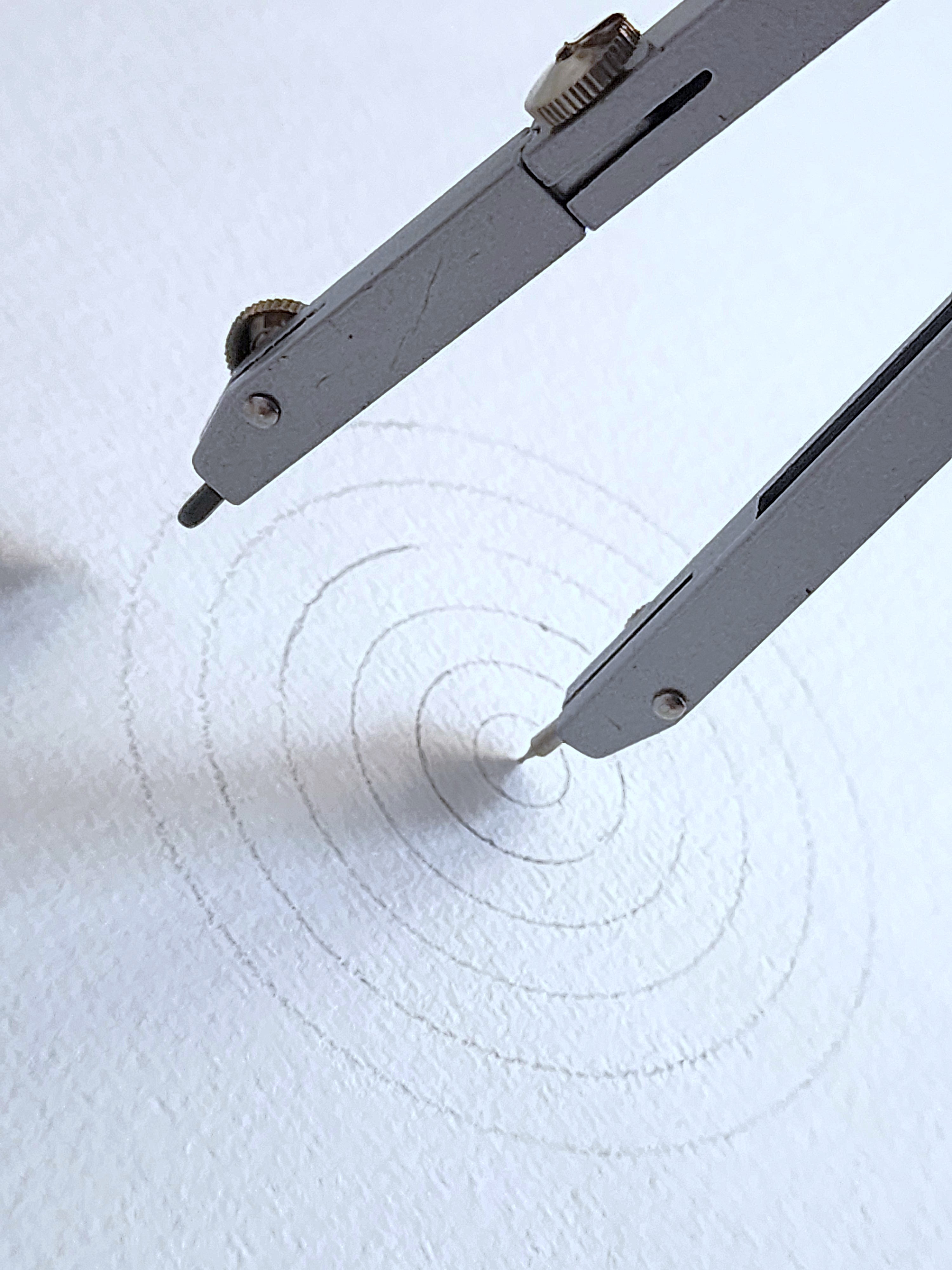
Everything starts from the centre. The compass, the breath, the first ring.
Geometry as a way in
There is something about the geometry of mandalas that makes all of this possible. The structure holds you. You know where the next ring goes, you know what the next section needs — and within that framework, the mind can relax. It has something to follow. It doesn’t have to invent everything from nothing.
And then, inside that structure, something unexpected happens. Simple shapes — a petal, a dot, a small repeated arc — start combining into something complex. A triangle becomes a flower. A row of half-circles becomes a crown. The geometry doesn’t constrain the piece; it gives the creativity somewhere to land. Playing with simple geometry can result in the most complex and unique shapes — things you couldn’t have planned, things that emerge only because you gave them a structure to grow from.
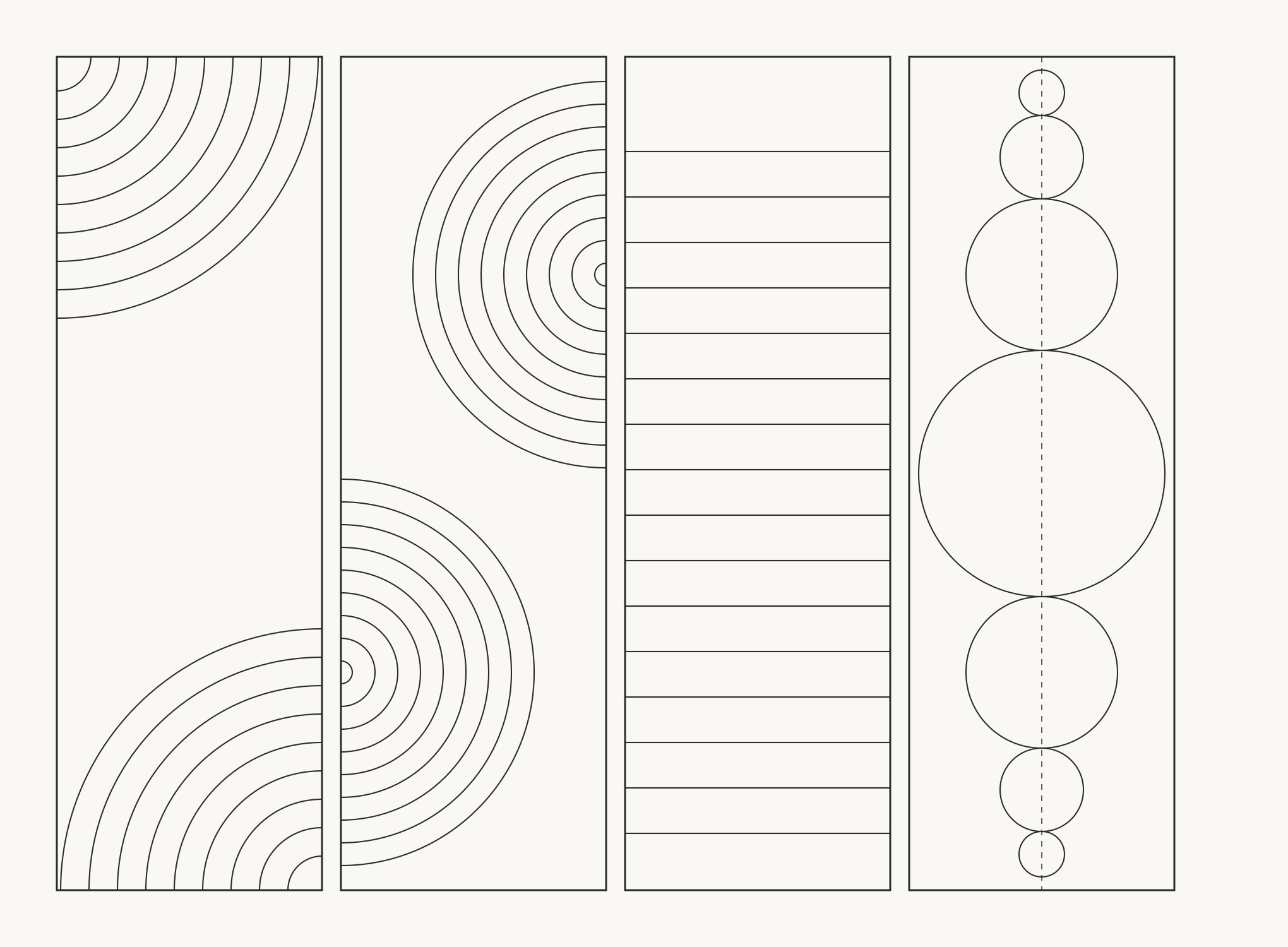
Simple elements. Arcs, lines, circles. The building blocks that become something much larger.
What the piece holds
When I look back at the mandalas I’ve made, I can feel the state I was in when I made them. The ones drawn in a slow, quiet evening have a different quality to the ones made when something was unsettled in me — more angular, more contrast, more tension in the pattern. I didn’t plan that. The hand just knows.
A mandala holds what you bring to it. The calmness and the chaos — both are welcome, both find their way into the pattern. And when it’s finished, there is something about looking at it that feels like release. The feelings went somewhere. They are on the paper now, not inside you. You can look at them from the outside, and then you can let them go.
That, more than anything, is why I keep making them. Not because I’m chasing the perfect piece — I gave that up a long time ago, or at least I keep giving it up. But because the making of it asks me to be here, now, breathing, present. And for the time it takes to draw one ring at a time, that is exactly where I am.
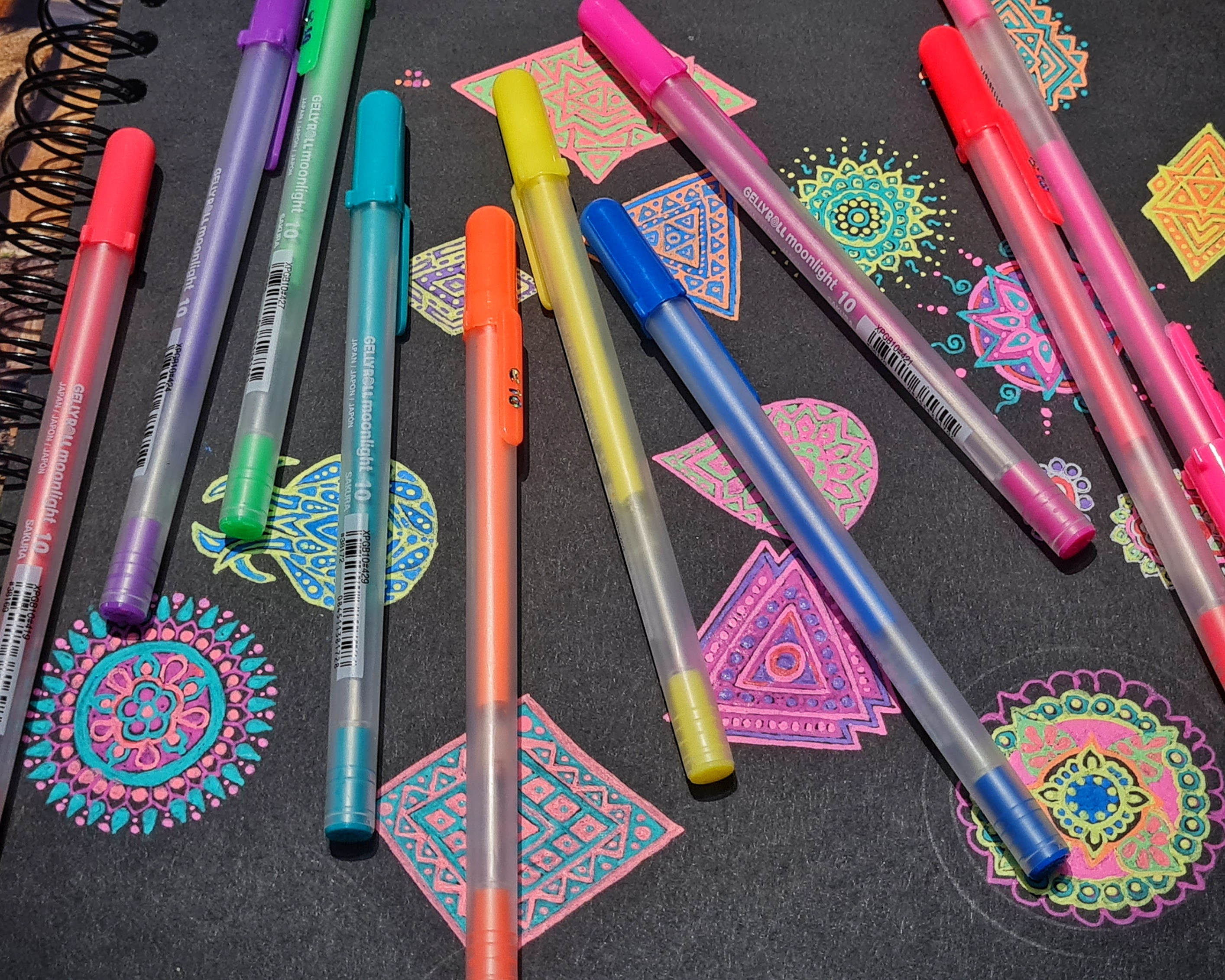
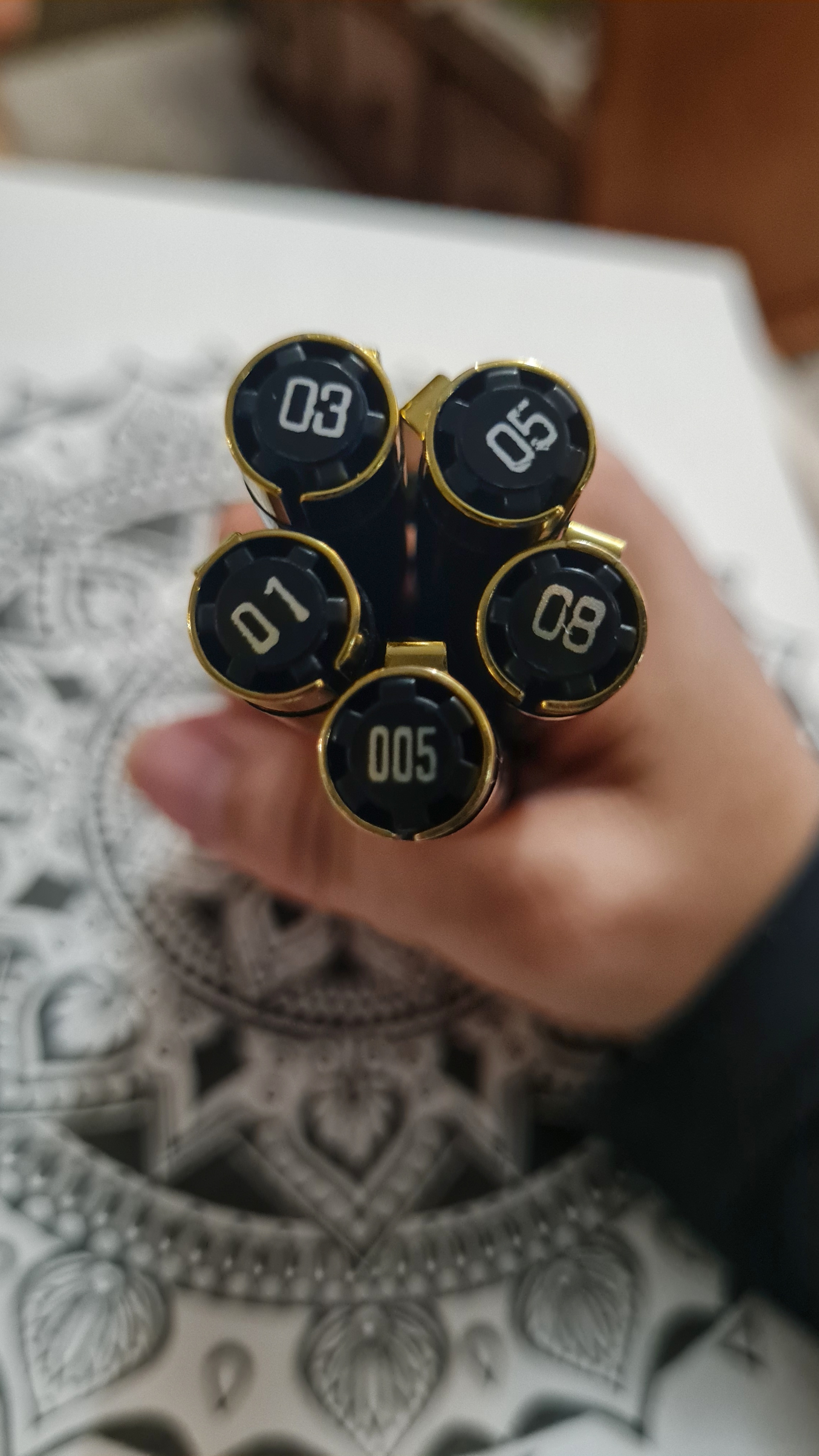
Studio table — pens, doodles, and the quiet pleasure of just making marks.
If you would like to explore mandala drawing for yourself, the Mandala Workshop waitlist is open — you can add your name and I will let you know when sessions are running.