Something small is growing in here
On propagation, patience, and why the waiting is actually the good part.
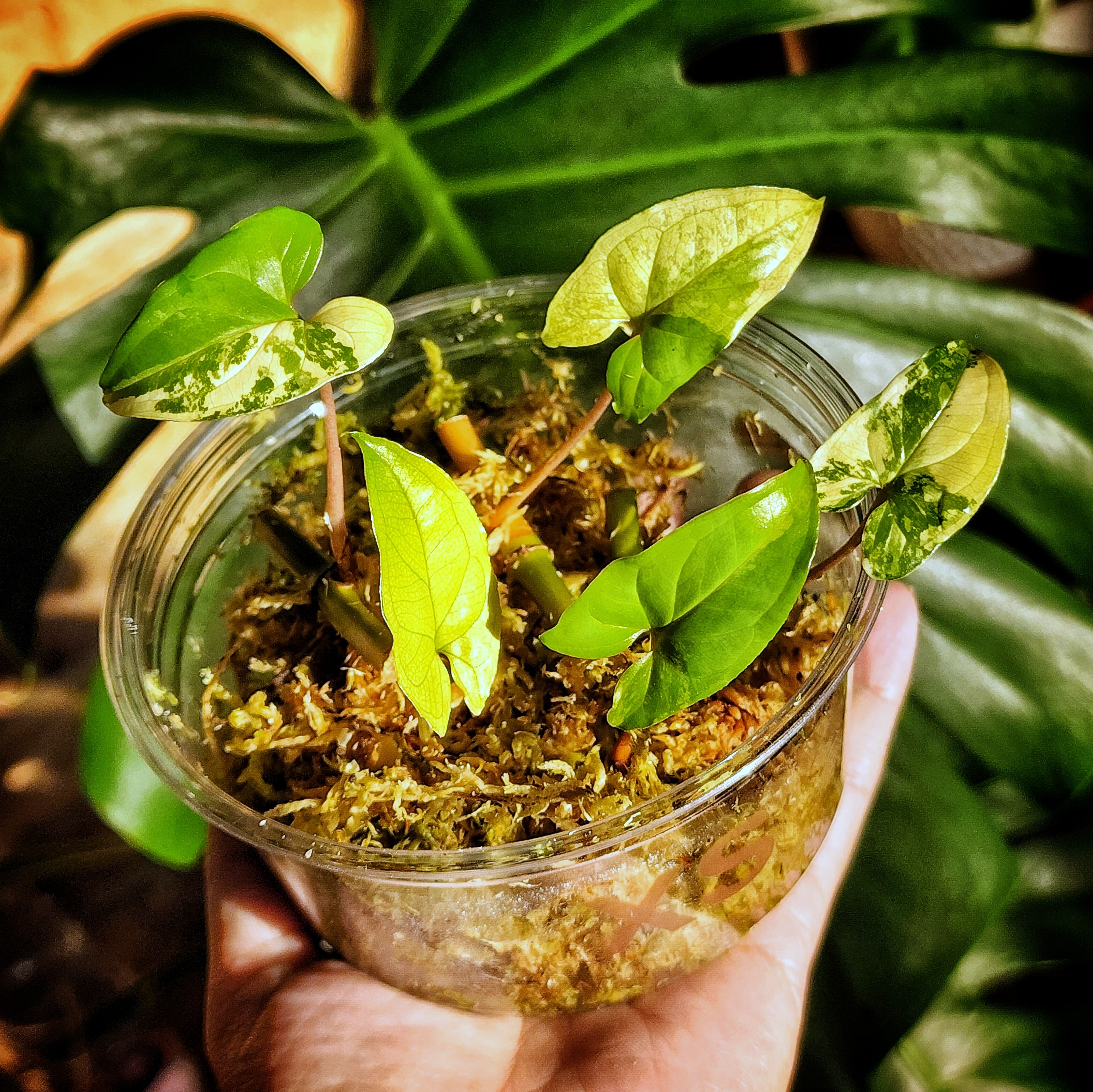
Baby plants nestled into sphagnum moss — the start of something.
There is a little tray on my bench right now that I keep glancing at. It has been there for a few weeks. Nothing dramatic has happened — and that, I've learned, is exactly how it's supposed to go.
These are propagations. Small cuttings pressed into damp sphagnum moss, waiting to decide whether they'd like to put down roots. Each one was cut carefully, given a little wound-healing time, then tucked into the moss with a kind of hopeful carefulness that feels very familiar to me. It is not so different from how I start a new piece of art.
You set up the conditions. You give it what it needs. Then you get out of the way and let it happen at its own pace.
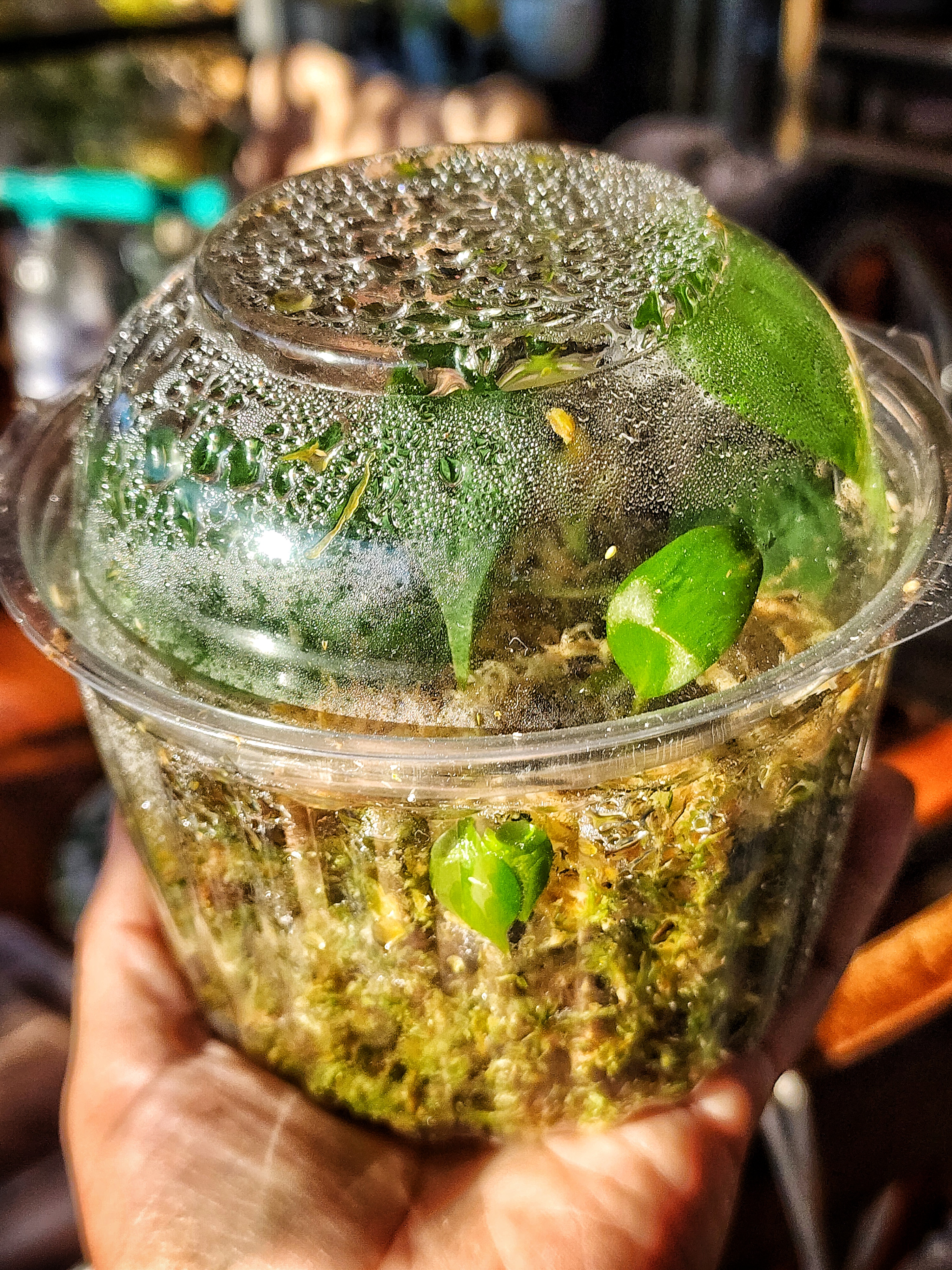
The lid in place — a closed little world
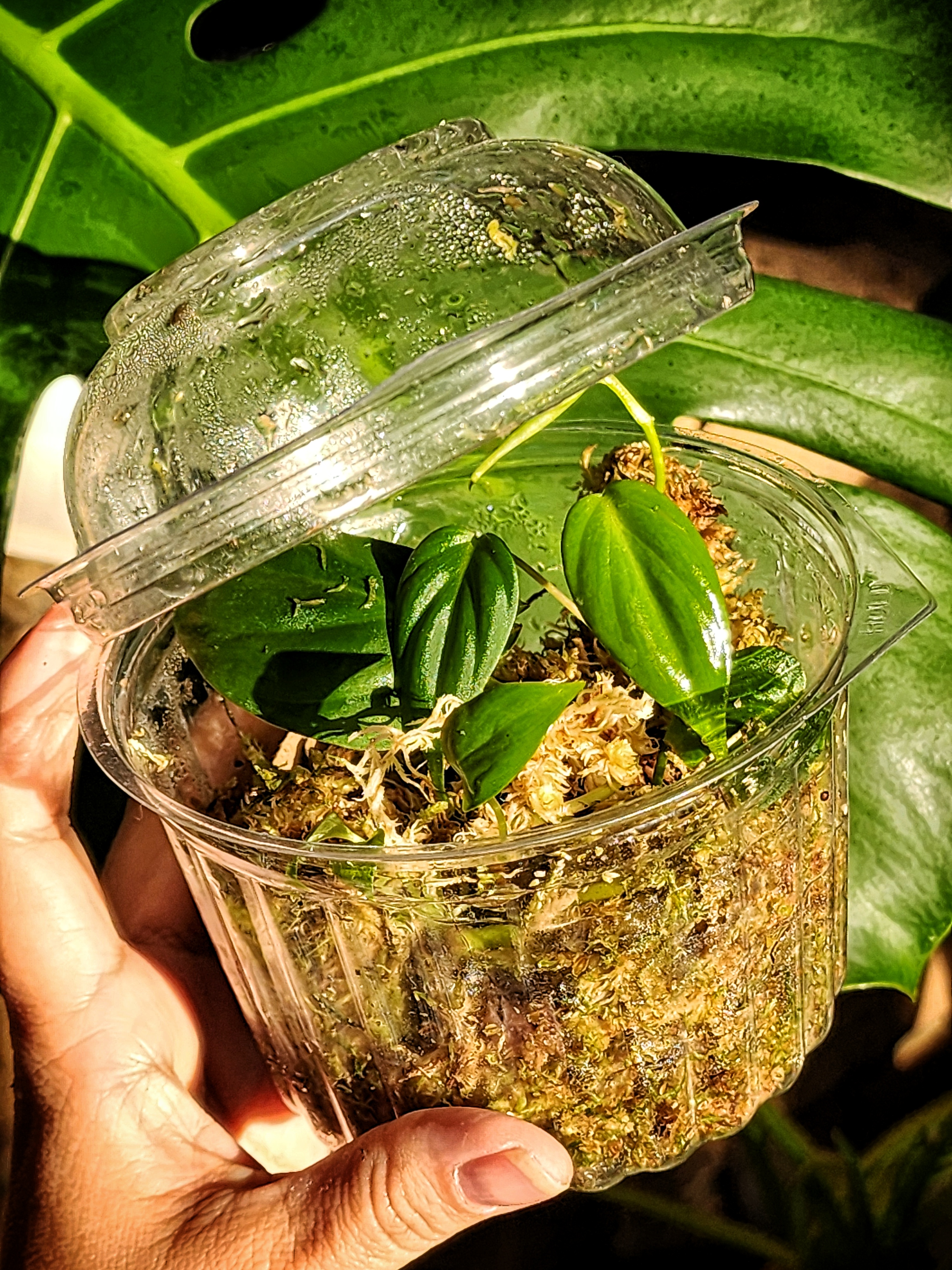
Condensation on the inside — the moss breathing
The containers have lids on them. This is deliberate — it keeps the humidity high, creates a little greenhouse effect inside. When you look through the side you can see the condensation collecting on the inside of the lid, tiny droplets forming and sliding back down. The air inside is thick and warm and alive.
It is not the most glamorous thing I've made. But I find myself checking on them more than I check on most things in the studio. There is something about watching a living thing decide to grow that is very grounding.
Sphagnum moss holds moisture without becoming waterlogged — it gives the cuttings the humidity they need while still letting the roots breathe. The condensation you see on the lid is the whole system working. The little plants are in there, doing their thing, completely unbothered.
I have always been drawn to processes that take time. Quilling is like that — you can't rush a coil, you can only roll it. Mandalas are like that too — they reveal themselves in layers, and if you push ahead before one section is finished, the whole thing loses its balance. Propagation is just another version of that same lesson.
Some things can't be made faster. They can only be made well, or made badly. The slowness is not the obstacle — it is part of the work.
Once they have roots — small and white and tentative — they will move into soil. From there, moss poles. That is where it becomes a Fractal Alley thing: a plant that grows up and into something handmade, trailing across a structure that was made slowly and with care. But that part is still a while away.
For now, I just keep checking on the tray. Keep watching the condensation. Keep waiting, which has never been my strongest skill — but plants, like art, are teaching me.
If you are curious about the moss poles these little ones are destined for, the workshop waitlist is open — you can add your name and I will let you know when sessions are running.